
.png)
Madhubani Painting: A Step-by-Step Guide to Understanding This Beautiful Art Form

Madhubani painting (also referred to as Mithila painting) is vibrant folk art that has its roots in Mithila region of India and Nepal. This art form is not merely a visual feast; it holds deep cultural significance and represents rich traditions of people who practice it. In this blog, we will explore characteristics, materials and various styles of Madhubani painting, along with tips on how to try it yourself. Let’s dive in!
Step 1: Understand the Origin of Madhubani Painting 🎨
The origins of Madhubani painting can be traced back to Mithila region, which encompasses parts of Bihar in India and Nepal. This art form is primarily practiced by women; however, they create stunning wall art (that captures various themes—religious to social events).

Step 2: Explore the Subjects of Madhubani Painting 🌼
Madhubani paintings encompass a broad spectrum of subjects; (however), the themes generally include 1) mythology, 2) nature and 3) social issues. This rich tradition reflects cultural narratives, although some may overlook its complexity. Because of their vibrant colors and intricate patterns, these artworks captivate viewers. But, it is essential to recognize the historical context that informs these scenes.
Religious Subjects: Depictions of deities like Devi Durga and scenes from Hindu epics.
Natural Elements: Representations of flora and fauna, including the moon, fish, elephants, and bamboo.
Social Events: Scenes from weddings and other significant social gatherings.

Step 3: Identify the Characteristics of Madhubani Painting 🖌️
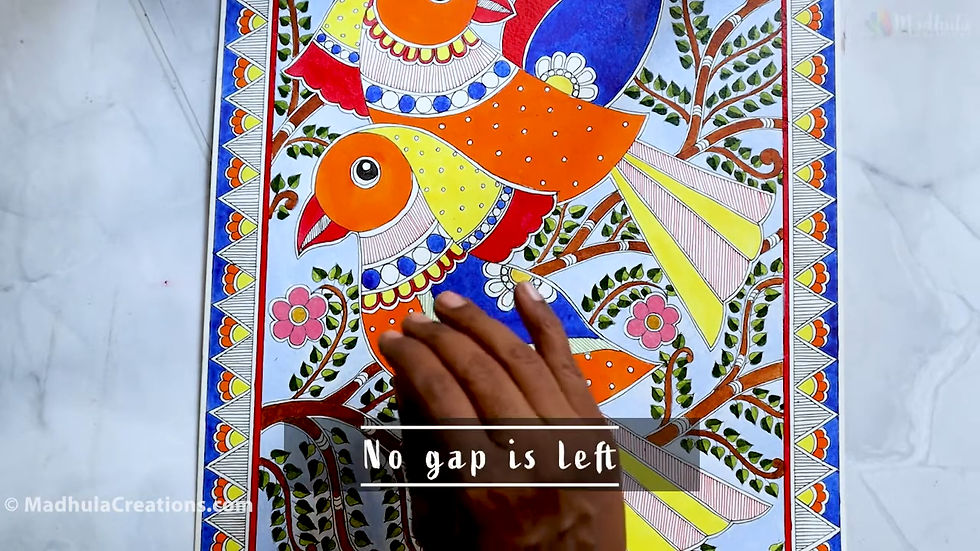
Several distinctive features define Madhubani paintings (1). These artworks are characterized by intricate patterns and vibrant colors; however, their significance extends beyond mere aesthetics. Although they often depict mythological themes, the artists also incorporate elements of nature and daily life (2). This rich tapestry of imagery serves not only to beautify but also to convey cultural narratives (3). Because of their unique style, Madhubani paintings have gained international recognition, attracting the attention of art enthusiasts everywhere.
Two-Dimensional Figures: Characters in the paintings are represented in a flat, two-dimensional style.
Double Lines: Figures and subjects are outlined with double lines, creating a bold effect.
Intricate Fillings: The areas inside the main subjects are filled with vibrant colors or intricate line work, leaving no empty spaces.
Beautiful Borders: Borders often feature natural elements such as flowers, birds, and geometric patterns.
Distinct Facial Features: Figures typically have pointed noses and large, bulging eyes.
Step 4: Discover the Materials Used in Madhubani Painting 🎨
Traditionally (and quite fascinatingly), Madhubani paintings were executed on freshly plastered mud walls and floors. The materials (which are diverse) and techniques employed encompass: however, the artistry goes beyond mere tools and substances. Although the medium is essential, the cultural significance imbues the work with depth. This unique approach captivates viewers, because it merges tradition with innovation.
Painting Tools: Artists use fingers, twigs, matchsticks, brushes, and nib pens.
Colors: Natural dyes and pigments derived from plants are used, with rice paste creating the outline. For example:
Charcoal for black
Turmeric for yellow
Henna leaves and marigold for various shades of green

Step 5: Get to Know the Different Styles of Madhubani Painting 🎭
There exist five distinct styles (of Madhubani painting), each possessing unique characteristics; however, the artistic expression varies significantly across these forms. Although they share common themes, the details differ greatly. This diversity is evident because each style reflects the cultural nuances of its region. But, while the foundational techniques remain consistent, the interpretation by individual artists introduces a personal touch.
Bharni: Known for vibrant colors filled in enclosed areas, outlined in black.
Kachni: Features a lot of line work, using one or two muted colors.
Tantric: Focuses on religious content, depicting deities and symbols.
Godna: Also called tattoo style, it features body motifs and concentric circles.
Kohbar: Traditionally done in a room to bless newlywed couples, symbolizing fertility and prosperity.

Step 6: Learn About the Conservation of Madhubani Painting 🌍
Efforts (to preserve and promote) this art form are ongoing; notable initiatives (1) include: however, there are challenges. Some artists struggle, although they are dedicated. This is because the audience (often) fluctuates and funding can be scarce. Nevertheless, many continue to advocate for its importance, but the path is fraught with obstacles.
Exhibitions by artists showcasing their work across galleries in India.
The Indian Railways' initiative to paint trains like the Bihar Sampar Express with Madhubani designs, adding color to travel.
The Mithila Museum in Japan, which houses over 850 Mithila paintings.

Step 7: Current Trends in Madhubani Painting 📈
Today, Madhubani art (which has undergone significant evolution) has transcended mere walls. Artists are now (1) creating works on: however, this transformation is not without challenges. Although the medium has expanded, the essence remains intact. Because of this, the connection to tradition is preserved, but new interpretations emerge.
Paper and cloth
Canvases
Everyday objects like pillow covers, bags, and decorative items.
Modern artists (1) are also utilizing acrylics, watercolors and permanent markers; however, the themes persist in reflecting contemporary societal issues. This is important because, although traditional mediums have their place, new forms of expression emerge. But, these themes challenge audiences, making them think critically about the world around them.
Step 8: Try Your Hand at Madhubani Painting! ✨
If you haven’t (yet) tried creating a Madhubani painting, I encourage you to do so. It’s fulfilling and relaxing (in nature) experience that allows for great expression through simplicity. Don’t hesitate to share your creations and experiences with me (in the comments) because I would love to hear about them! However, many find this process daunting; but, it can be incredibly rewarding. Although it may seem intimidating at first, the joy that comes from creating is unmatched.
For more resources on improving your acrylic painting skills, check out Better Your Acrylics, which offers top tips for beginners.


Want to take your colour mixing skills even further? I’ve put together a free Acrylic Colour Mixing Guide packed with easy recipes and tips to help you get started. Download it now and start mixing colours with confidence!

Comments